Jawline PeptideGuideThe LooksmaxxingProtocol
The jaw isn't just about aesthetics — it's the structural foundation of your entire face. And it's one of the few adult bones that continues to respond to growth signals.
IGF-1 LR3, GHK-Cu, BPC-157, and CJC-1295/Ipamorelin each target a different layer of facial structure. Together they form the most comprehensive non-surgical jawline optimization protocol currently available.
The Foundation
Why Jawline Is the #1 Looksmaxxing Target
The looksmaxxing community has converged on a simple truth: facial attractiveness is primarily determined by facial structure — and the jawline is the dominant structural feature. Strong mandibular definition, clear gonial angle, and a sharp jawline are consistently rated as the highest-leverage physical traits by attraction researchers across cultures.
What makes the jaw particularly interesting from a peptide standpoint is that it remains responsive to growth factor signaling in adults. Unlike most skeletal structures that become largely static, the mandible maintains active remodeling activity. This is why mewing works — mechanical load changes bone architecture over time. Peptides amplify the same remodeling machinery at the molecular level.
The protocol isn't about growing new bone from nothing. It's about optimizing the growth factor environment to maximize the density, angularity, and definition of the structure you already have — while simultaneously improving the collagen and ligament architecture that creates surface-level definition.
Mandibular density, gonial angle, ramus height — driven by IGF-1 and GH signaling via osteoblast activation
Masseteric and retaining ligaments — the connective tissue that creates surface definition. BPC-157 is the primary driver
The collagen scaffold of facial dermis and subcutaneous tissue — GHK-Cu drives density, hydration, and architecture
Facial fat volume and distribution — GH axis optimization (CJC/Ipa) drives buccal fat reduction and lipolysis
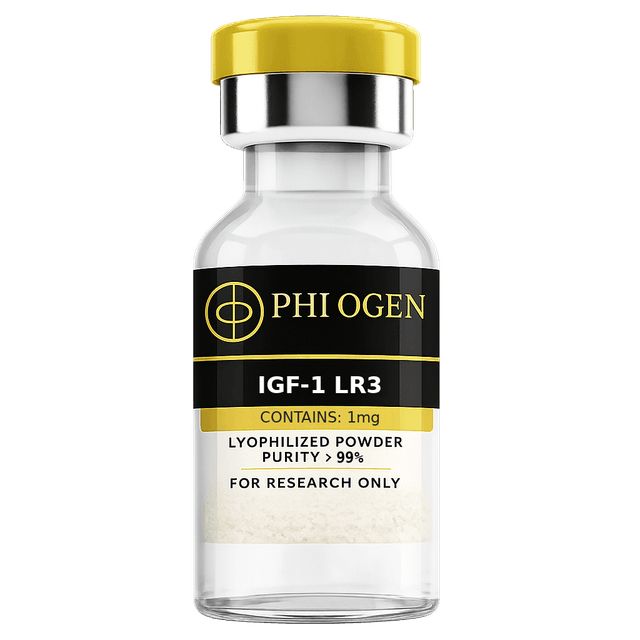
IGF-1 LR3: Bone Density & Remodeling
IGF-1 LR3 is the most potent growth factor signal available in a research peptide. It binds the IGF-1 receptor on osteoblasts — the bone-building cells — and drives a cascade of anabolic signaling that increases bone matrix synthesis, mineral deposition, and ultimately, bone density. In the mandible specifically, sustained IGF-1 signaling over months drives measurable changes in cortical bone thickness and angular definition.
The mechanism isn't mysterious. Adolescent facial bone development is driven by IGF-1. The reason jaw development accelerates during puberty is the same reason peptide-driven bone remodeling works in adults: IGF-1 receptor activation triggers the same osteoblast/osteoclast remodeling cycle that sculpts facial structure in growth years.
For jawline use specifically: IGF-1 LR3's extended half-life (20–30 hours vs. 20 minutes for native IGF-1) means sustained receptor signaling throughout the day. A 4-week cycle at 50–80 mcg daily, cycled with 2-week breaks, provides the growth factor environment needed for meaningful bone remodeling over a 6–12 month horizon.
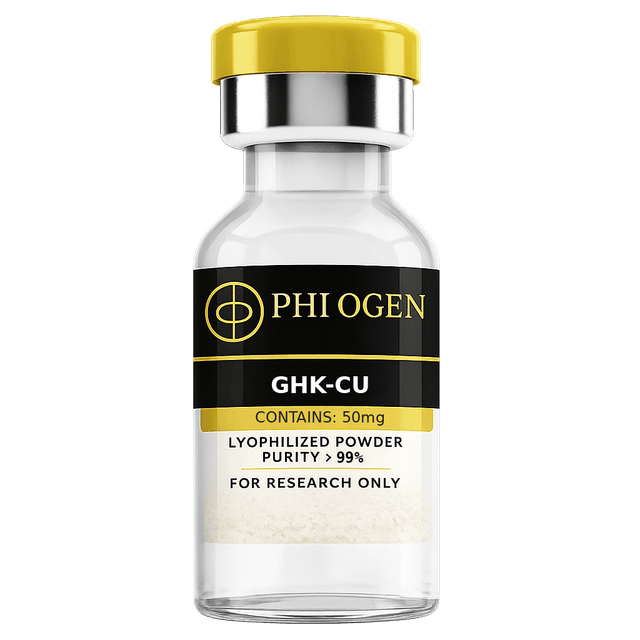
GHK-Cu: Facial Collagen Architecture
GHK-Cu (copper tripeptide) activates over 4,000 genes in human fibroblasts — more gene expression activity than any other known peptide. Its core action in facial tissue is collagen and elastin synthesis: it upregulates collagen I, III, and V production while simultaneously inhibiting the metalloproteinases that degrade existing collagen.
The architectural result in the face is significant. Denser collagen under the jawline skin creates a tighter, more defined appearance. The collagen matrix in the dermis and subcutaneous layer is what gives facial features their sharp, angular appearance — soft, degraded collagen means soft, undefined facial features.
GHK-Cu is the fastest-acting peptide in the jawline protocol. Most users report visible skin tightening and improved facial structure definition within 6–10 weeks. It works continuously alongside the slower bone and ligament changes driven by IGF-1 and BPC-157.
BPC-157: Facial Ligament Integrity
The masseteric ligaments, mandibular retaining ligaments, and fascial layers create the sharp, defined surface appearance of a strong jawline. These are fundamentally connective tissue structures — and BPC-157 is the connective tissue peptide.
BPC-157 upregulates growth hormone receptor expression in ligament fibroblasts and accelerates collagen type I synthesis in ligamentous tissue. The result is tighter, more tonically active facial ligaments that improve surface definition — particularly at the jawline and midface.
CJC/Ipa: Facial Fat Distribution
Growth hormone is the master regulator of facial fat distribution. Low GH — common after the mid-20s — leads to buccal fat accumulation and the soft, rounded facial phenotype that obscures jawline definition. CJC-1295/Ipamorelin restores the GH axis.
Elevated nocturnal GH (from pre-sleep CJC/Ipa administration) drives facial lipolysis and redistributes facial fat toward a leaner, more defined appearance over months. This is often the fastest visible change users notice — reduced buccal fat, sharper cheekbone appearance, more defined jawline edges.
The Science
How Bones Respond to Peptide-Driven Growth Factor Signaling
Adult bone remodeling is driven by a continuous cycle of osteoclast resorption and osteoblast synthesis. Peptides shift this balance toward net bone formation by activating the same growth factor receptor pathways that drive skeletal development.
IGF-1 Receptor Activation
IGF-1 LR3 binds IGF-1R on osteoblasts, activating PI3K/Akt and MAPK/ERK pathways — the core signaling cascades for bone matrix synthesis and mineral deposition.
GH Axis Amplification
CJC-1295/Ipamorelin elevates systemic IGF-1 via liver secretion, creating a sustained anabolic environment that supports ongoing osteoblast activity in facial bone tissue.
Collagen Matrix Remodeling
GHK-Cu upregulates collagen I synthesis and activates TGF-β1 signaling, improving the quality of bone matrix and the overlying soft tissue collagen architecture simultaneously.
Build Your Stack
Find Your Jawline Protocol
3 questions. Personalized peptide recommendations based on your starting point and goals.
Build Your Jawline Protocol
3 questions. Personalized peptide recommendation.
Common Questions
Jawline Peptide FAQ
Can peptides actually change your jawline as an adult?+
Yes — adult bone is not static. The mandible (jawbone) maintains ongoing remodeling activity throughout adulthood, driven by mechanical loading, growth factor signaling, and hormonal environment. Peptides like IGF-1 LR3 upregulate the same growth factor receptor pathways that drive bone remodeling. The changes are slower than in adolescence, but bone density, gonial angle definition, and ramus height all respond to sustained IGF-1 and GH signaling in adults. Most serious looksmaxxers running IGF-1 protocols report noticeable jawline changes at 6–12 months.
What does GHK-Cu specifically do for the face?+
GHK-Cu is a copper tripeptide that activates over 4,000 genes — with particularly strong activity on collagen, elastin, and glycosaminoglycan synthesis. In facial tissue, it increases the density and quality of the collagen matrix that gives structural definition to the jawline, cheekbones, and orbital area. It also drives angiogenesis (new blood vessel formation) and reduces metalloproteinase activity that degrades collagen. Users report visible facial structure sharpening within 8–12 weeks of consistent use.
How does BPC-157 improve facial structure specifically?+
BPC-157's primary contribution to facial aesthetics is through the facial ligament and fascia system. The masseteric ligaments, retaining ligaments, and fascial layers are what create the sharp, defined appearance of a well-defined jawline — and they are fundamentally connective tissue. BPC-157 upregulates growth hormone receptor expression in ligament fibroblasts and accelerates collagen type I synthesis, improving the integrity and tone of these structural facial supports. Tighter retaining ligaments mean more defined facial contours.
What is the role of the GH axis in facial fat distribution?+
Growth hormone is the primary hormone governing facial fat distribution. Low GH (common with aging, poor sleep, and sedentary lifestyle) leads to facial fat accumulation — particularly buccal fat — that obscures jawline definition. CJC-1295/Ipamorelin restores the GH axis, which drives facial lipolysis and remodeling of fat distribution toward a more defined facial phenotype. Most users running CJC/Ipa protocols notice facial fat redistribution within 8–16 weeks.
How long does the jawline peptide protocol take to show results?+
Timeline varies by target: GHK-Cu and collagen changes are the fastest — most users see meaningful facial skin and structure tightening within 6–10 weeks. Facial fat redistribution via GH axis optimization typically requires 8–16 weeks of consistent CJC/Ipa use. Bone density and architectural changes are the slowest — bone remodeling cycles are 3–6 months, so meaningful jawline bone changes require 6–12+ months of sustained IGF-1 and GH signaling. The full jaw transformation protocol is a 12-month commitment.
Can I run IGF-1 LR3 and GHK-Cu simultaneously?+
Yes — IGF-1 LR3 and GHK-Cu target completely different receptors and pathways. IGF-1 LR3 acts systemically on IGF-1 receptors driving growth factor signaling. GHK-Cu acts locally on copper-dependent enzymatic processes driving collagen synthesis and gene expression. They are highly synergistic: IGF-1 drives the structural bone remodeling while GHK-Cu optimizes the collagen architecture of overlying soft tissue. Running both simultaneously is the recommended approach for comprehensive facial optimization.
Start Your Jawline Protocol
IGF-1, GHK-Cu, BPC-157, CJC/Ipa — the complete non-surgical facial structure stack. The jaw responds to growth signals at any age.
Affiliate link — commission earned at no additional cost. Not medical advice.