Your NAD+ Is Half What It Used to Be
By age 50, your NAD+ levels are roughly half what they were at 20. That single fact explains a staggering amount of what we call "getting old" — the fatigue, the slower recovery, the cognitive fog, the cellular decay. David Sinclair called NAD+ "the closest thing to a fountain of youth we've discovered." That's a big claim from a Harvard scientist who's usually very careful with his words.
What NAD+ Actually Does at the Cellular Level
Before we talk about dosing or delivery routes, it's worth understanding why NAD+ occupies such a central position in aging biology. This isn't a vitamin that plugs a minor gap. NAD+ is a fundamental currency of cellular energy and information — involved in over 500 enzymatic reactions in the human body.
Sirtuin Activation (SIRT1–7)
Sirtuins are the longevity proteins that caloric restriction activates — the biological reason fasting extends lifespan in almost every organism studied. They require NAD+ as a cofactor. No NAD+, no sirtuin activity. Replenishing NAD+ directly turns the sirtuin switch back on.
PARP DNA Repair Enzymes
PARP1 is the enzyme your cells use to detect and repair DNA strand breaks. It consumes NAD+ at a ferocious rate — a single DNA damage event can deplete local NAD+ pools by 80%. Aging cells accumulate more DNA damage and burn through NAD+ faster, creating a vicious cycle.
Mitochondrial Energy Production
NAD+ is the critical electron carrier in the mitochondrial electron transport chain. NADH shuttles electrons from glucose and fat oxidation to complexes I–IV, driving ATP synthesis. Declining NAD+ means declining energy — the cellular equivalent of running a power plant on half its fuel.
CD38 and the NAD+ Sink
CD38 is an enzyme that consumes NAD+ and rises dramatically with age and inflammation. It's thought to be the primary driver of age-related NAD+ decline — not reduced production, but dramatically increased consumption. Targeting CD38 (with apigenin, for instance) is one strategy to preserve NAD+ alongside direct supplementation.
How Much NAD+ Have You Lost?
Use the calculator below to see your estimated NAD+ level at your current age and the downstream biological impact.
NAD+ Decline & System Impact Calculator
Enter your age to see your estimated NAD+ level and the downstream impact on key biological systems.
Physical energy, endurance, exercise performance
Genomic stability, cancer prevention, cellular longevity
Epigenetic regulation, inflammation, metabolic health
Insulin sensitivity, fat burning, nutrient utilization
Focus, motivation, mood, memory formation
NAD+ supplementation can restore levels by ~75% of the deficit. Light bars above show estimated post-supplementation levels. Actual results vary based on dose, formulation, and individual metabolism.
Estimates based on published NAD+ age-decline data. For educational purposes only.
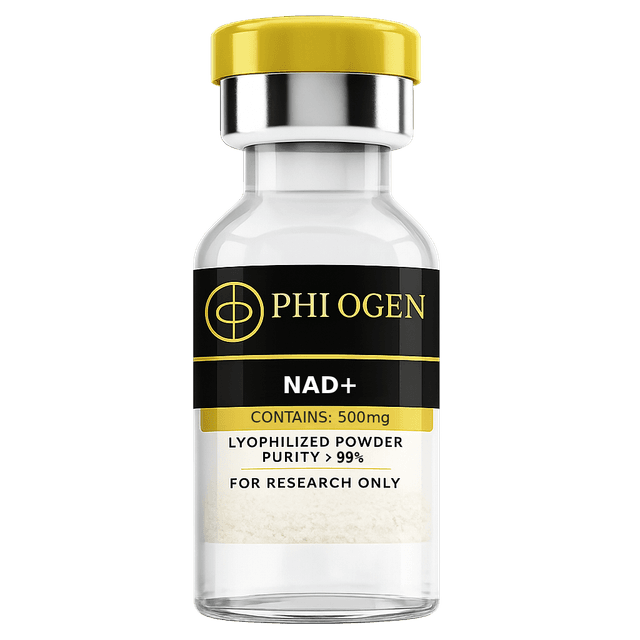
NAD+ 500mg — The Starting Point
The 500mg vial is the standard entry dose for injectable NAD+ research. Reconstituted and administered subcutaneously, it provides a direct systemic boost that bypasses the absorption limitations of oral precursors like NMN. Most protocols run 500mg daily for 4–8 weeks before dialing back to a maintenance frequency.
IV vs Injectable vs Oral NAD+
Not all NAD+ delivery is equal. The route of administration dramatically affects how much NAD+ actually reaches your tissues, how quickly levels rise, and how long the elevation lasts. The body's NAD+ repletion isn't just about giving it more — it's about getting it past the absorption bottleneck.
IV Infusion
Recommended for research useClinical setting typically required. The gold standard for acute NAD+ repletion. Can cause flushing, chest pressure, and GI discomfort at high infusion rates.
Subcutaneous Injection
Recommended for research useHome-injectable. Slower onset than IV but avoids infusion side effects. Research peptide suppliers provide NAD+ at 500mg and 1000mg vial concentrations.
NMN / NR Oral
Convenient but requires gut conversion. NMN → NR → NAD+. Much of the oral dose is metabolized before reaching target tissues. Useful for maintenance between injectable cycles.
IV Slow Drip (NAD+ 1000mg)
High-dose drip over 2–4 hours. Used in addiction medicine and aggressive anti-aging protocols. Requires medical supervision due to cardiovascular load.
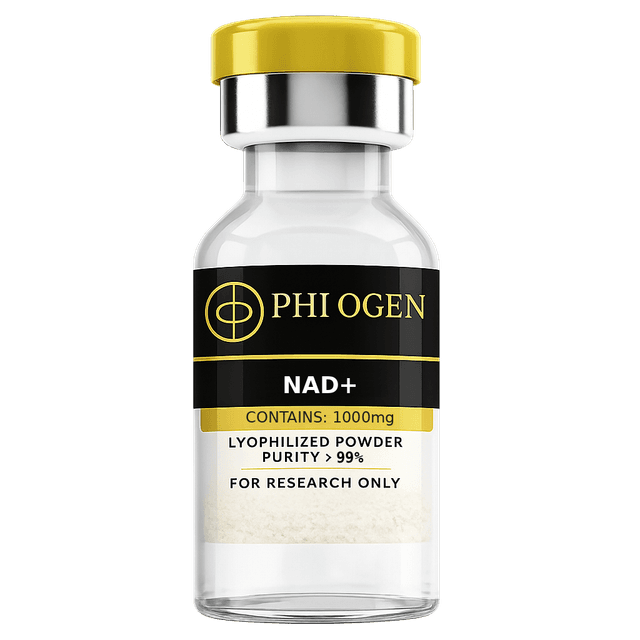
NAD+ 1000mg — For Aggressive Repletion
The 1000mg vial is used in loading protocols and by those with advanced anti-aging goals. A single 1000mg injection or slow IV drip can elevate whole-blood NAD+ levels for 7–10 days — making weekly dosing a viable schedule for maintenance after an initial loading phase. Popular in longevity clinic protocols where comprehensive bloodwork guides frequency.
The NAD+ Anti-Aging Stack
NAD+ is powerful on its own, but it reaches its full potential when combined with peptides that address the other hallmarks of aging simultaneously. Think of it as restoring the electrical grid (NAD+/mitochondria), rewriting the damaged code (Epithalon/telomeres), retraining the maintenance crews (GHK-Cu/gene expression), and repairing the infrastructure (BPC-157).
| Peptide | Dose | Timing | Role |
|---|---|---|---|
| NAD+ 500mg | 500mg SC daily | Morning | Core energy and sirtuin activation |
| Epithalon | 5mg SC daily | Evening | Telomerase activation — run 10-day cycles 2× per year |
| GHK-Cu | 2mg SC daily | Evening | Gene expression reset + collagen |
| BPC-157 | 250mcg SC 2×/day | AM/PM | Systemic repair + mitochondrial support |
| Sermorelin | 200mcg SC | Pre-sleep | GH pulse for metabolic + cellular repair |
This is an aggressive longevity protocol. Most beginners start with NAD+ alone for 4–6 weeks before layering additional compounds. All research peptide use is for informational purposes.
The Oral Supplement Problem
The NMN and NR supplement market is worth billions. And while oral NAD+ precursors do work — they do raise blood NAD+ levels — the ceiling is much lower than injectable. Here's why: NAD+ itself is too large to survive gut transit intact. So you're supplementing with precursors (NMN, NR) that must be enzymatically converted, first in the gut, then in various tissues. Each conversion step means losses. Injectable NAD+ skips all of that. You're delivering the actual molecule. For people who are already NAD+-depleted (basically everyone over 35), the injectable route provides faster, more complete, and more verifiable repletion.
Frequently Asked Questions
Is injectable NAD+ better than NMN or NR supplements?+
What does NAD+ actually feel like when it's working?+
How do I dose NAD+ as a research peptide?+
Why does IV NAD+ sometimes cause discomfort?+
Should I cycle NAD+ or take it continuously?+
Can NAD+ protect against cancer?+
What is the David Sinclair NAD+ protocol?+
Start Restoring Your NAD+ Levels
Injectable NAD+ is available as a research peptide. Whether you start with 500mg daily or go straight to the 1000mg high-dose protocol depends on your goals and baseline.