Peptides forDeep SleepOptimization
Most people are trying to fix their sleep with supplements that cost $30. The answer might be $60 away. DSIP, Epithalon, and CJC/Ipamorelin address the actual biology of sleep — not just the symptoms.
Sleep is not passive recovery. It is the single most anabolic, neuroprotective, and anti-aging window in every 24-hour cycle. 70% of your daily growth hormone fires during deep sleep. Peptides let you maximize every second of it.
The Foundation
Sleep Is the #1 Recovery and Anti-Aging Factor
Every optimization protocol you run — whether it's peptides, training, nutrition, or supplementation — lives or dies based on the quality of your sleep. Poor sleep doesn't just make you feel bad. It accelerates biological aging by up to 50%, blunts growth hormone release, elevates cortisol, degrades cognitive function, and dismantles the anabolic environment that every other intervention requires.
The mainstream answer to poor sleep is melatonin and magnesium. Those aren't wrong — they're just operating at the wrong level. Melatonin supplements your deficiency. Sleep peptides restore the systems that create that deficiency in the first place.
DSIP, Epithalon, CJC-1295/Ipamorelin, and GHRP-6 each target a different bottleneck in sleep quality. Used correctly, they transform not just how you sleep — but how you recover, age, and perform.
70% fires during deep sleep
Peaks during REM sleep
Reduced 60% during SWS
90% of glymphatic clearance occurs during sleep
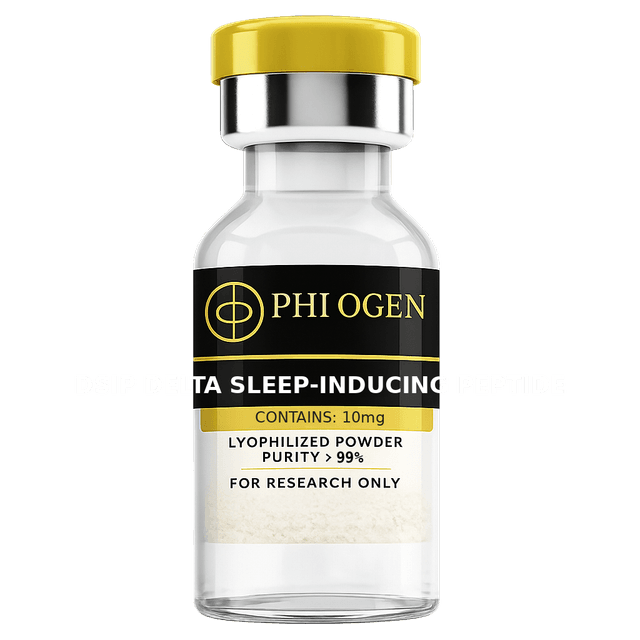
DSIP — The Peptide Literally Named For Sleep
In 1974, Swiss researchers isolated a nonapeptide from rabbit brain tissue during induced sleep and named it Delta Sleep Inducing Peptide. The name is not marketing — it describes the exact mechanism of action. DSIP is the brain's own sleep signal.
It works primarily on the HPA axis — reducing CRH and cortisol secretion while facilitating the neurological transition from wakefulness to slow-wave sleep. The result is dramatically reduced sleep latency (you fall asleep faster) and meaningfully increased proportion of restorative SWS.
Unlike sedative drugs or melatonin, DSIP doesn't force sleep. It creates the neurological conditions for sleep — the same conditions your own brain produces naturally in youth, before stress, age, and lifestyle degraded the system.
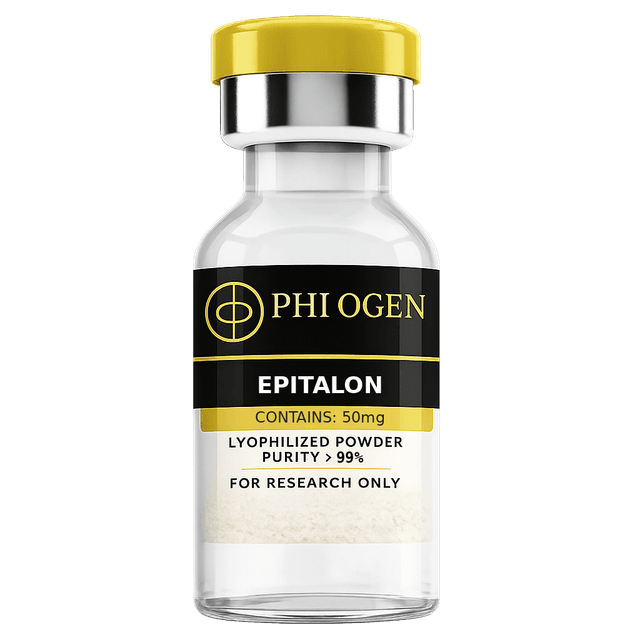
Epithalon: Restoring Your Pineal Gland
Your pineal gland is the master clock of your circadian rhythm. It produces melatonin in response to darkness, orchestrating the cascade of hormonal events that govern sleep architecture. By your 40s, pineal function has degraded significantly — melatonin output is a fraction of what it was at 20. This is why sleep quality deteriorates with age.
Epithalon doesn't just add melatonin to the system. It repairs and restores the pineal gland's capacity to produce melatonin endogenously. After a 10–20 day Epithalon cycle, the pineal gland's sensitivity normalizes — your body starts making the melatonin it was supposed to make all along.
The clinical results are striking: improved sleep onset, sustained deep sleep, better morning cortisol rhythm, and the general sense that your body has returned to a younger circadian state. Two cycles per year — spring and fall — is the standard longevity protocol.
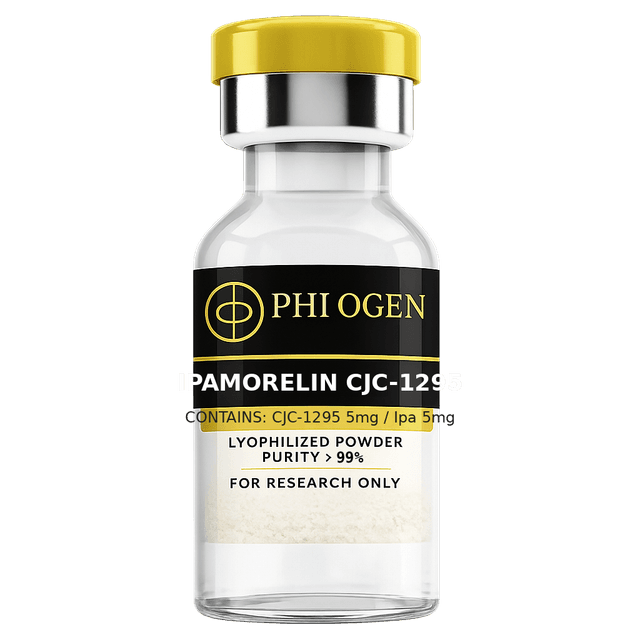
CJC-1295/Ipamorelin: Amplifying Your Nightly GH Pulse
The largest growth hormone pulse of your entire day occurs during the first deep sleep cycle — approximately 60–90 minutes after falling asleep. This isn't a side effect of sleep. It's the entire point of sleep, from an anabolic and anti-aging perspective.
CJC-1295 is a GHRH analog that amplifies the magnitude of this pulse. Ipamorelin is a selective GH secretagogue that deepens the slow-wave sleep during which this pulse occurs. Together, they create a compounding effect: deeper sleep that produces more GH, which then further improves sleep quality in the cycles that follow.
The protocol is precise: inject on an empty stomach immediately before sleep. Food — particularly carbohydrates and insulin — blunts GH release. Fasting state plus CJC/Ipamorelin is the maximum GH pulse state possible without pharmaceutical GH.
Deep SWS Enhancement
GHRP-6: The Deep Sleep Depth Peptide
GHRP-6 acts on ghrelin receptors in the hypothalamus — the same system that governs hunger, metabolic rate, and deep sleep architecture. While Ipamorelin is the refined modern choice, GHRP-6 is the OG sleep-depth peptide with decades of research supporting its ability to increase slow-wave sleep duration.
Ghrelin Receptor Agonism
GHRP-6 acts as a potent ghrelin receptor agonist in the hypothalamus. Ghrelin signaling is directly tied to SWS depth — activating these receptors drives the brain into deeper delta-wave sleep stages.
Maximum GH Pulse
Among injectable GH secretagogues, GHRP-6 produces one of the most potent single-dose GH pulses available. Combined with deep sleep, this creates the ideal anabolic recovery window.
Dose & Protocol
100–200 mcg subcutaneous, 30 minutes before sleep on empty stomach. Expect the hunger spike — this is normal and part of the mechanism. 5 on / 2 off cycling protocol.
Find Your Protocol
What's Your Sleep Problem?
Select your primary sleep issue and get a targeted peptide recommendation.
SLEEP PROBLEM IDENTIFIER
What's Your Sleep Problem?
Select your primary sleep issue to get a targeted peptide recommendation.
For research purposes only. Not medical advice. Consult a healthcare provider before use.
The Sleep Peptide Comparison
The Full Protocol
The Complete Sleep Peptide Stack
- • DSIP 200–300 mcg SC
- • 30 min before bed
- • 5 nights on, 2 off
- • Best for: high latency, racing mind
- • CJC 100 mcg + Ipa 100 mcg SC
- • Epithalon 5 mg SC (cycle phase)
- • Both 45 min before bed
- • Best for: deep sleep + recovery
- • DSIP 200 mcg + Epithalon 5 mg
- • CJC/Ipa 100/100 mcg
- • All 45–60 min pre-sleep
- • Best for: maximum optimization
Common Questions
Sleep Peptide FAQ
What is DSIP and how does it improve sleep?+
DSIP (Delta Sleep Inducing Peptide) is a nonapeptide first isolated from rabbit brain tissue in 1974 during the natural onset of sleep. It works by modulating the hypothalamic-pituitary-adrenal (HPA) axis — reducing cortisol secretion and lowering central arousal to facilitate the transition into slow-wave sleep. It reduces sleep latency (the time to fall asleep) and increases the proportion of restorative deep sleep. Most users notice results within the first 3–5 nights.
How does Epithalon restore sleep quality?+
Epithalon is a synthetic tetrapeptide that restores pineal gland function — specifically, it normalizes the pineal gland's sensitivity and melatonin output, which degrades with age. Unlike supplementing melatonin directly, Epithalon fixes the underlying machinery. Most people over 35 have meaningfully degraded pineal function; Epithalon literally rejuvenates this gland over a 10–20 day cycle, resulting in dramatically improved sleep continuity and circadian rhythm stability.
Why take CJC-1295/Ipamorelin before bed specifically?+
Because your largest natural growth hormone pulse of the day fires during the first deep sleep cycle — typically 60–90 minutes after falling asleep. Taking CJC-1295/Ipamorelin immediately before bed (on an empty stomach) means the GH secretagogues are active right when your pituitary is primed to pulse. This amplifies the nocturnal GH release by 3–5x, which directly increases slow-wave sleep depth AND accelerates all the tissue repair and anti-aging processes that GH drives overnight.
Can I stack DSIP and Epithalon together?+
Yes — this is actually one of the most popular sleep peptide combinations. DSIP handles the acute sleep onset and HPA modulation, while Epithalon works at the deeper level of restoring circadian machinery. They act via different mechanisms and there is no known interaction between them. A typical stack: DSIP 200 mcg + Epithalon 5 mg taken together 45–60 minutes before bed. This combination addresses both sleep onset and sleep architecture simultaneously.
How long before I notice results from sleep peptides?+
DSIP typically shows effects within the first 1–3 nights — users report noticeably faster sleep onset and deeper rest. CJC/Ipamorelin effects on sleep depth usually manifest within 5–10 days. Epithalon's circadian restoration is more gradual — most users notice meaningful improvement in sleep continuity by week 2, with the full effect appearing after completing a 10–20 day cycle. The longer-term circadian reset from Epithalon is cumulative across cycles.
What is GHRP-6 and how is it different from Ipamorelin for sleep?+
Both GHRP-6 and Ipamorelin are GH secretagogues, but GHRP-6 has a stronger acute GH pulse effect — it's essentially more potent but with a key side effect: significant ghrelin activation that causes hunger (the "GHRP-6 hunger spike"). For sleep use, this can actually be useful since going to sleep slightly hungry after GHRP-6 administration is associated with deeper SWS. Ipamorelin is cleaner and more selective — preferred for long-term use. GHRP-6 is preferred by some for occasional maximum-depth sleep recovery sessions.
Are sleep peptides safe? Any side effects?+
The sleep peptides covered here — DSIP, Epithalon, CJC-1295, Ipamorelin — have extensive research histories and favorable safety profiles. DSIP has been studied in humans since the 1970s. Epithalon has a 40-year research history from Dr. Khavinson's lab with no significant adverse events documented. The GH secretagogues can cause transient water retention or slight groggy feeling the morning after at higher doses. These are research peptides — not approved for human use by the FDA — and should be used under professional guidance.
Start Your Sleep Protocol
DSIP, Epithalon, CJC/Ipamorelin — the complete sleep peptide toolkit. The most anabolic window of your day deserves the best tools.
Affiliate link — commission earned at no additional cost. Not medical advice.