Actual Collagen Fibers, Not Just Hope
The skincare industry sells you hope. Peptides sell you collagen fibers — actual structural proteins that change the architecture of your skin. GHK-Cu triggers your fibroblasts to synthesize collagen I, III, and IV. SNAP-8 prevents the muscle contractions that form expression lines. BPC-157 drives angiogenesis in the dermis, restoring the vascular supply that collagen production depends on.
Why Skin Loses Its Firmness
Skin aging isn't mysterious — it's a set of specific, addressable biological processes. Understanding the mechanisms tells you exactly which peptides to deploy and why.
Collagen Cross-Linking
As collagen fibers age, they form abnormal cross-links that make them stiff and brittle rather than flexible and strong. New collagen synthesis can't keep pace with this degradation — the net result is thinner, less resilient skin.
Elastin Loss
Elastin is the protein that makes skin snap back. Production drops dramatically after your 20s. Unlike collagen, lost elastin is very difficult to replace — which is why early intervention with elastin-stimulating peptides like GHK-Cu is more effective than late intervention.
Fibroblast Senescence
Fibroblasts are the cells that produce collagen and elastin. With age, they become senescent — they stop dividing and producing structural proteins but remain metabolically active, secreting inflammatory molecules (the "senescence-associated secretory phenotype"). Peptides like GHK-Cu can partially override this senescent state.
Reduced Vascularization
Skin requires constant blood flow to deliver nutrients for collagen synthesis. Capillary density in the dermis decreases with age — reducing the raw materials available for repair. BPC-157's angiogenic effects address this directly.
What GHK-Cu Actually Synthesizes
GHK-Cu (copper peptide) is the most extensively researched peptide in skin biology. Its key mechanism is direct upregulation of collagen synthesis enzymes in dermal fibroblasts — across multiple collagen subtypes, not just one. Here's what it actually builds.
The primary structural collagen — the main component of the dermis that provides tensile strength and thickness.
The "young" collagen — more elastic and flexible than Type I. High in fetal tissue and healthy young skin. GHK-Cu reverses the Type I/III ratio shift that occurs with aging.
The basement membrane collagen — crucial for dermal-epidermal adhesion and skin barrier function.
The recoil protein. GHK-Cu upregulates both elastin synthesis and the enzymes that correctly organize elastin fibers in the extracellular matrix.
Tissue inhibitor of metalloproteinases — prevents the MMP enzymes from breaking down newly synthesized collagen before it can integrate.
Find Your Personalized Protocol
Select your primary skin concern for a tailored topical + injectable protocol recommendation.
Skin Firmness Protocol Selector
Select your primary skin concern for a personalized topical + injectable protocol.
Full-Face & Body Firmness Protocol
For comprehensive skin quality improvement across multiple zones, the all-over protocol combines topical application with systemic injectable support and IGF-1 axis optimization.
Topical Protocol
Resets 31% of aged genes in skin tissue — comprehensive epigenetic skin rejuvenation
Prevention layer — stops new lines from forming while injectable work repairs existing ones
Injectable Protocol
Foundation of the all-over protocol — the broadest collagen and elastin signal available
Supports the IGF-1 receptor signaling that drives skin cell proliferation and dermal density
Expected Timeline
10–14 weeks for noticeable whole-face improvement
Research peptides only. Individual results vary. Topical application refers to cosmetic-grade formulations.
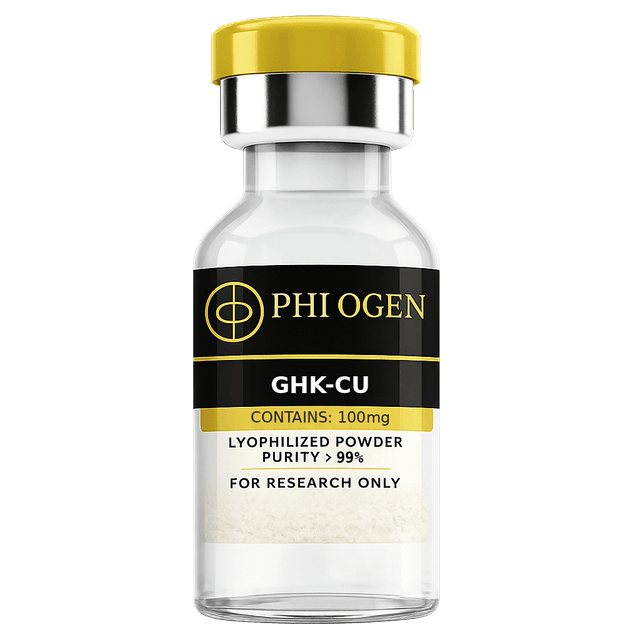
GHK-Cu 100mg
The 100mg vial provides approximately 50 days of supply at 2mg/day — the standard anti-aging skin dose. GHK-Cu modulates over 4,000 genes, resets 31% of aged gene expression patterns, and directly stimulates collagen I, III, and IV synthesis. Injectable delivery achieves systemic distribution that topical formulations cannot match for serious structural skin repair.
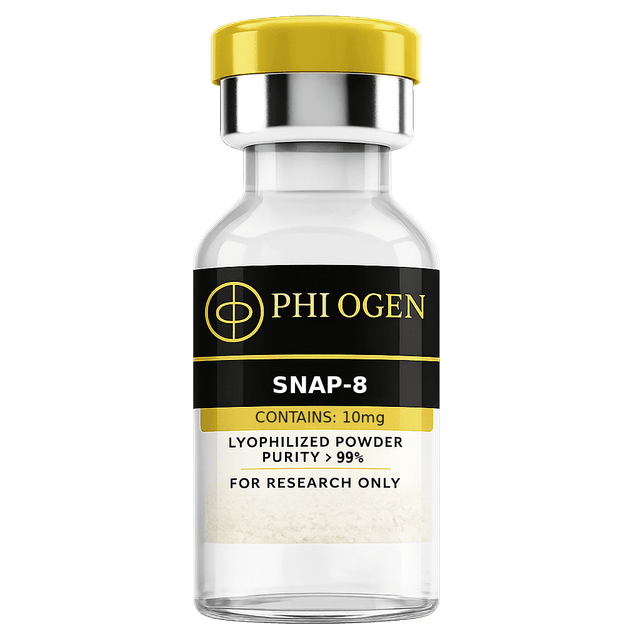
SNAP-8 10mg
SNAP-8 (acetyl octapeptide-3) is the topical peptide equivalent of Botox's mechanism — without the injection and with a subtler, more natural result. It competes with the SNARE protein complex, partially inhibiting the neuromuscular signal that causes expression muscle contractions. Clinical data shows up to 63% reduction in wrinkle depth in the eye/forehead area with twice-daily application.
BPC-157: The Skin Repair Peptide
BPC-157 is primarily known for its role in tendon and gut healing — but its skin repair effects are equally impressive. The key mechanism for skin is angiogenesis: BPC-157 drives new blood vessel formation in damaged or aging tissue. This is critical because collagen synthesis is an energy-intensive process that requires constant nutrient delivery. Aging skin is often poorly vascularized — and improving blood flow to the dermis dramatically accelerates every other repair process.
Angiogenesis
New capillary formation in the dermis — restores the nutrient supply for collagen synthesis
Fibroblast Migration
Recruits collagen-producing cells to sites of damage or repair
GH Receptor Upregulation
Makes skin cells more responsive to IGF-1 signals for proliferation and repair
Topical vs Injectable — Which Should You Use?
Topical
Advantages
Limitations
• Limited penetration to deep dermis
• Concentration constraints in formulation
• Less systemic benefit
Best for
Fine lines, surface texture, daily maintenance protocol
Injectable
Advantages
Limitations
• Requires reconstitution
• Daily subcutaneous injection
• Higher cost
Best for
Deep wrinkles, sagging, serious structural repair, anti-aging stack
Frequently Asked Questions
Is GHK-Cu better topically or as an injectable?+
How does SNAP-8 compare to Botox?+
How long does it take to see results from GHK-Cu injectable?+
Can BPC-157 be used on the skin?+
What's the difference between GHK-Cu 100mg and smaller vials?+
Is the IGF-1 axis relevant for skin rejuvenation?+
Start Rebuilding Your Skin Architecture
GHK-Cu, SNAP-8, and BPC-157 are available as research peptides. Start with the protocol selector above to find the right approach for your skin goals.