What If We Didn't Stop at Two Receptors?
Retatrutide is what happens when scientists ask: what if we didn't stop at two receptors? Semaglutide hit one. Tirzepatide hit two. Retatrutide hits three — GLP-1, GIP, and glucagon — and the results are something the weight loss field had never seen before: 24.2% weight loss with no plateau at 48 weeks.
The GLP Evolution: One Receptor at a Time
Each generation of GLP-based therapy added a receptor and dramatically expanded results. Retatrutide is the logical third step — and each addition has delivered non-linear gains.
Semaglutide
(2017)GLP-1~15% lossFirst GLP-1 agonist to demonstrate significant weight loss in non-diabetics. Changed how medicine thought about obesity as a treatable condition.
Tirzepatide
(2022)GLP-1 + GIP~22.5% lossAdding GIP receptor agonism produced synergistic fat loss that exceeded predictions. The SURPASS-2 trial showed superiority over semaglutide at every dose tested.
Retatrutide
(2024–2026)GLP-1 + GIP + Glucagon~24% lossThe glucagon receptor is the metabolic rate dial. Adding glucagon agonism raises basal energy expenditure — you burn more calories at rest. The trial showed no plateau at 48 weeks, which had never been seen before.
Explore the Triple Receptor Mechanism
Click each receptor to understand what it contributes to the 24% weight loss result.
Retatrutide: Triple Receptor Mechanism Explorer
Retatrutide activates three receptors simultaneously. Select each to understand its unique contribution to the 24% weight loss result.
GLP-1 Receptor — What It Does
Appetite Suppression
Acts on hypothalamic GLP-1 receptors to reduce hunger signals and extend satiety between meals.
Gastric Emptying
Slows gastric emptying, extending the satiety signal from meals and improving post-meal glucose control.
Insulin Secretion
Glucose-dependent insulin stimulation — only triggers insulin release when blood glucose is elevated, minimizing hypoglycemia risk.
Clinical Context
Shared mechanism with semaglutide. Contributes ~15% weight loss on its own.
(GLP-1 only)
(GLP-1 + GIP)
(GLP-1 + GIP + Glucagon)
Phase II data. Phase III ongoing. For research and educational purposes only.
Why the Glucagon Receptor Changes Everything
Adding GIP to GLP-1 pushed weight loss from 15% to 22.5%. Adding glucagon pushed it to 24.2% — but the more important finding was no plateau. Here's what the glucagon receptor actually does in the retatrutide context.
Hepatic Fat Oxidation
Glucagon receptor activation drives the liver to oxidize fat directly. This is why glucagon was historically dismissed — it raises blood glucose by driving hepatic glycogenolysis. But in the context of GLP-1 coactivation, the blood glucose elevation is suppressed while the fat oxidation effect remains, giving you all the metabolic upside without the hyperglycemia.
Basal Metabolic Rate Elevation
This is the key differentiator from tirzepatide. Glucagon receptor activation raises resting energy expenditure — your BMR goes up even without exercise. In the Phase II trial, this effect appeared to compound over time rather than plateau, explaining why weight loss continued straight through week 48.
Thermogenesis in Brown Fat
Glucagon receptors on brown adipose tissue (BAT) drive thermogenesis — heat generation from fat burning. Brown fat activation is one of the most sought-after mechanisms in metabolic medicine. Retatrutide appears to activate this pathway in ways that semaglutide and tirzepatide do not.
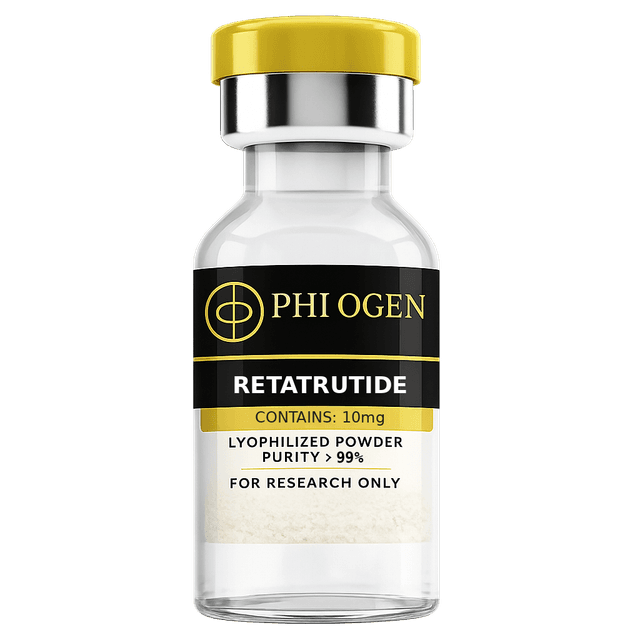
Retatrutide 10mg
Retatrutide is available as a research peptide at 10mg per vial. At typical weekly doses of 6–10mg, a 10mg vial provides 1–2 weeks of supply depending on your protocol stage. The slow escalation protocol is critical — beginning at 1–2mg/week and increasing gradually to minimize GI side effects.
Phase II Trial Data at a Glance
| Duration | 48 weeks |
| Participants | 338 adults (non-diabetic, BMI ≥27) |
| Primary endpoint | Percent change in body weight |
| Max dose tested | 12mg weekly SC |
| Average weight loss at max dose | 24.2% |
| Plateau observed? | No — trajectory still downward at week 48 |
| Phase III status | Ongoing (TRIUMPH program) |
Source: Jastreboff et al., NEJM 2023. Phase II dose-ranging trial of retatrutide in adults with obesity.

Semaglutide 6mg
The original GLP-1 agonist and still the most studied. For those starting a GLP-1 protocol, semaglutide provides proven results with the most established safety record. Once you've experienced the GLP-1 mechanism, upgrading to tirzepatide or retatrutide for greater efficacy is a logical next step.
View Semaglutide 6mgSemaglutide vs Tirzepatide vs Retatrutide
| Metric | Semaglutide | Tirzepatide | Retatrutide |
|---|---|---|---|
| Mechanism | GLP-1 | GLP-1 + GIP | GLP-1 + GIP + Glucagon |
| Avg weight loss | ~15% | ~22.5% | ~24.2% |
| Plateau | Yes (~20 weeks) | Yes (~24 weeks) | Not observed at 48w |
| BMR elevation | Minimal | Moderate | Significant |
| Liver fat reduction | Good | Better | Best |
| Data maturity | 5+ years | 3 years | Phase II complete |
| Approval status | FDA approved | FDA approved | Phase III ongoing |
Frequently Asked Questions
How is retatrutide different from tirzepatide?+
Why does the glucagon receptor raise metabolic rate?+
Is retatrutide approved by the FDA?+
What are the side effects of retatrutide?+
How do I dose retatrutide as a research peptide?+
Will retatrutide outperform tirzepatide for everyone?+
What's the Phase III TRIUMPH trial testing?+
The Most Powerful Weight Loss Peptide Available
Retatrutide is the frontier of GLP-based fat loss research. Available now as a research peptide for those who want results that even tirzepatide can't fully deliver.