The Drug That Changed Weight Loss Medicine
For decades, the medical community told overweight people to "eat less and move more." Then tirzepatide showed up and produced results that 30 years of willpower hadn't. A 150-pound person loses 33 pounds. A 220-pound person loses nearly 50. Not in some theoretical model — in controlled trials, in real patients, with no surgery.
22.5% — What That Actually Looks Like
These numbers come from the SURMOUNT-1 trial at the 15mg dose. Individual results vary based on adherence, diet quality, baseline metabolic health, and whether resistance training is included. The trial population was adults with obesity (BMI ≥30) or overweight with at least one weight-related condition.
Why Two Receptors Beat One
The story of tirzepatide is really the story of GIP — the overlooked receptor that changes everything. Pharmaceutical research had focused almost entirely on GLP-1 for decades. GIP was considered a "lesser" incretin with unclear benefits. Then Eli Lilly's researchers combined both and got results nobody expected.
GLP-1 Receptor
Reduces appetite, slows gastric emptying, triggers glucose-dependent insulin release
This is the same mechanism as semaglutide. It reduces how much you eat by acting on hypothalamic hunger centers — but it's only half the story with tirzepatide.
GIP Receptor
Directly regulates fat storage in adipose tissue, potentiates insulin secretion, preferentially targets visceral fat
GIP receptors sit on fat cells themselves. When tirzepatide activates them, it directly changes how the body's fat tissue responds to insulin — pushing fat cells toward fat burning rather than fat storage. Semaglutide doesn't touch this.
The synergy is the key insight. GLP-1 and GIP don't just add their effects — they amplify each other's action. GIP potentiates insulin secretion through a completely different intracellular pathway than GLP-1, which is why the combined effect exceeds what you'd predict by adding each receptor's contribution separately. This is called receptor cross-talk, and it's why the 22.5% figure isn't just "1.5× semaglutide" — it's qualitatively different weight loss.
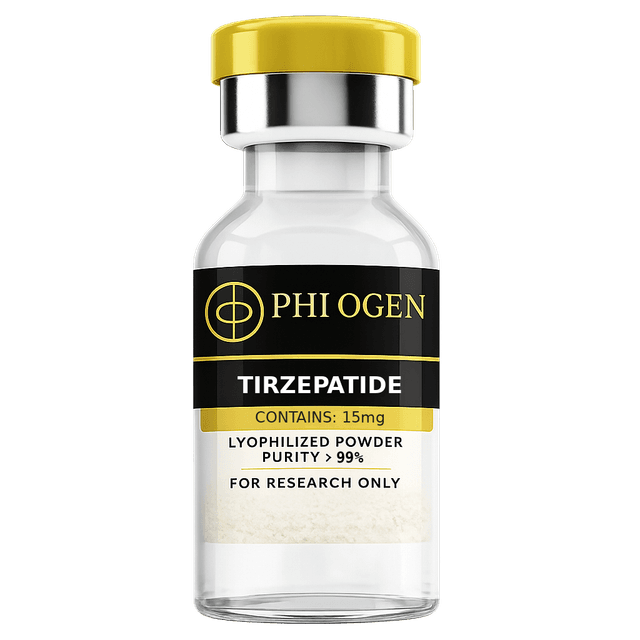
Tirzepatide 15mg
The 15mg vial corresponds to the highest dose studied in SURMOUNT-1. At this concentration, most users following a proper escalation protocol reach their therapeutic maintenance dose within 4–5 months. One vial typically covers 1–2 weeks at maintenance doses, depending on where in the escalation protocol you are.
The Escalation Protocol
Tirzepatide's side effects are real but manageable — and almost entirely dose-dependent. The escalation protocol exists to give your GI tract time to adapt before increasing to the next dose. Skipping steps is the most common mistake, and it leads to unnecessary nausea and early discontinuation. Patience at the lower doses pays off.
Starting dose. Allow gut adaptation. Most users experience minimal side effects at this stage.
First real therapeutic dose. Appetite suppression becomes noticeable. Weight loss typically begins here.
Mid-range dose. Continue only if tolerated well. Some users plateau here permanently.
Higher dose. Stronger appetite suppression. Watch for increased GI sensitivity.
Near maximum range. Reserve for those with specific high-loss goals.
Maximum dose (SURMOUNT-1 trial ceiling). Not required for most users — many achieve goals at 10mg.
Tirzepatide vs Semaglutide — Data Comparison
Select a clinical metric to see how the two drugs compare from published head-to-head trial data.
Tirzepatide vs Semaglutide — Head-to-Head Data
Select a clinical metric to compare outcomes from published trial data.
SURPASS-2 head-to-head: tirzepatide outperformed semaglutide at all three doses (5mg, 10mg, 15mg).
Why tirzepatide outperforms: Dual GIP + GLP-1 receptor agonism produces synergistic effects that neither receptor can achieve alone. GIP receptor activation directly impacts adipose tissue and potentiates insulin secretion through a different mechanism than GLP-1, explaining the superior clinical outcomes.
Data sourced from STEP, SUSTAIN, SURPASS, and SURMOUNT clinical trial programs. For educational purposes.
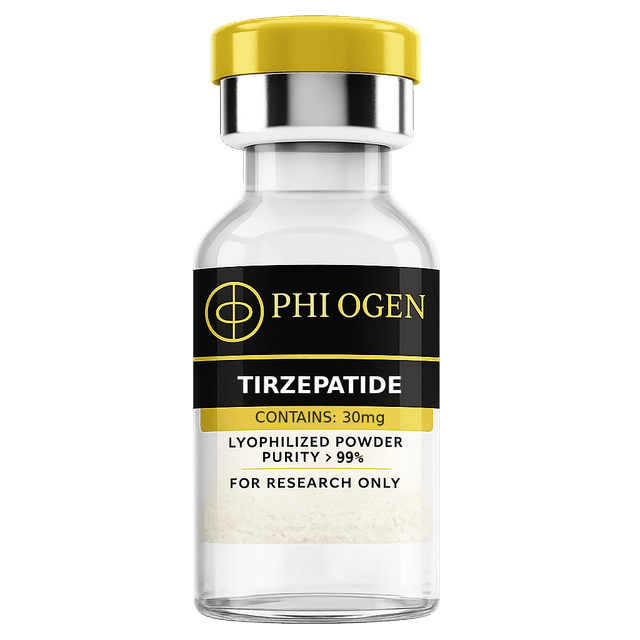
Tirzepatide 30mg — Bulk Supply
The 30mg vial offers extended supply for those in maintenance phase. At a maintenance dose of 10–12.5mg per week, a 30mg vial covers 2.5–3 weeks of therapy. For longer-term protocols where you've found your stable dose, bulk vials reduce per-mg cost significantly.
Tirzepatide vs Semaglutide vs Retatrutide
| Metric | Semaglutide | Tirzepatide | Retatrutide |
|---|---|---|---|
| Weight Loss | 15–17% | 20–22.5% | 24.2% |
| Mechanism | GLP-1 only | GLP-1 + GIP | GLP-1 + GIP + Glucagon |
| Muscle preservation | Moderate | Better | Best |
| Visceral fat reduction | Good | Superior | Superior+ |
| GI side effects | Moderate | Moderate | More common |
| Data maturity | 5+ years | 3+ years | Phase II/III |
Frequently Asked Questions
What makes tirzepatide better than semaglutide?+
Do I need to hit 15mg, or can lower doses work?+
What are the side effects of tirzepatide?+
Will I lose muscle on tirzepatide?+
How long do I need to run tirzepatide?+
What happens if I eat normally on tirzepatide?+
Can tirzepatide be stacked with GH peptides for body recomposition?+
Ready to Start the Protocol?
Tirzepatide is available as a research peptide. Start with the 15mg vial and follow the escalation protocol. Most users see measurable weight loss within 4–6 weeks.